
Chiari Malformation & the Torque Release Approach in Palm Coast, FL
What Is a Chiari Malformation?
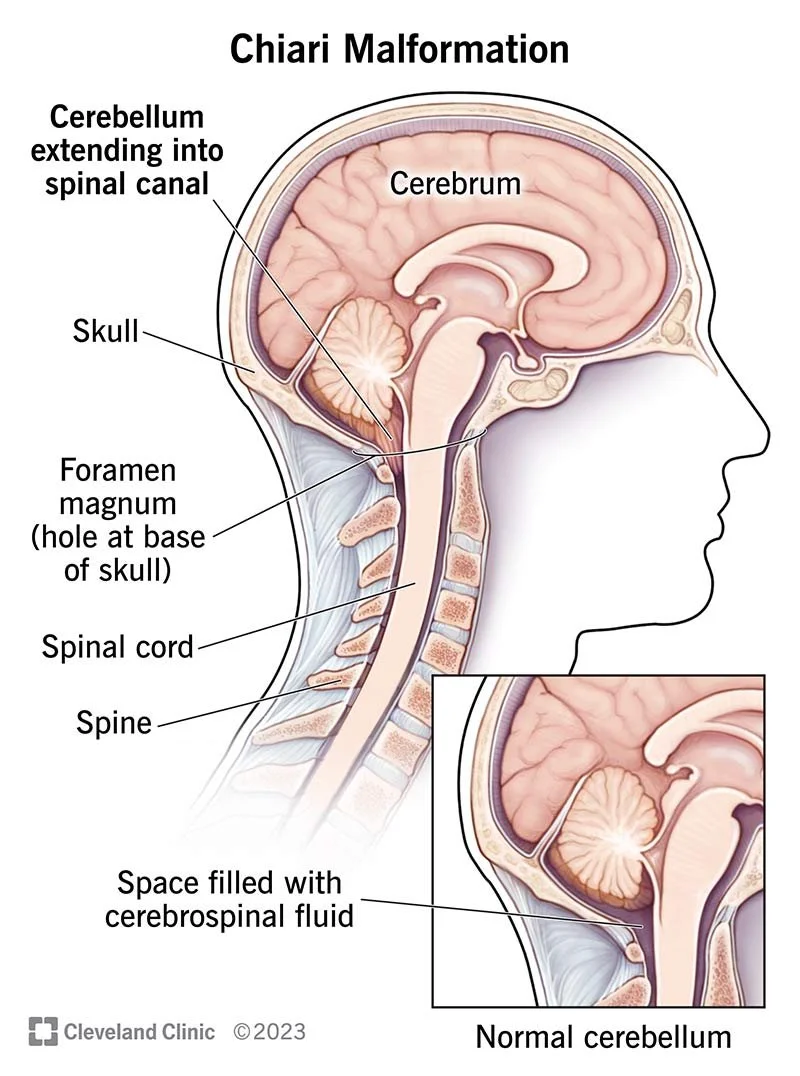
A Chiari malformation (CM) is a structural condition in which brain tissue — specifically the cerebellar tonsils — extends into the spinal canal. Normally, the cerebellum sits just above the foramen magnum (the opening at the base of the skull). In those with Chiari malformation, part of the cerebellum is pushed downward, crowding the space through which the brainstem and spinal cord pass.
This crowding disrupts the normal flow of cerebrospinal fluid (CSF), interferes with neurological signaling, and can compress surrounding tissues — all of which contribute to a wide and often confusing range of symptoms.
Chiari malformations are classified into four types (Type I through IV), with Type I being by far the most common in adults. Many people don't receive a diagnosis until adulthood, sometimes years after symptoms first appear.
Recognizing the Symptoms
Chiari malformation symptoms vary widely from person to person, and many overlap with other conditions — which is part of why it so often goes undiagnosed. Common presentations include:
🧠 Headaches at the back of the skull, often worsened by coughing or straining
⚡ Neck pain and stiffness, sometimes radiating into the shoulders
🌀 Dizziness, balance problems, and difficulty with coordination
🫀 Tingling or numbness in the hands and feet
👁️ Vision changes, eye pain, or light sensitivity
😴 Fatigue, brain fog, and difficulty concentrating
👂 Tinnitus (ringing in the ears) and difficulty swallowing
💤 Sleep disruption, including sleep apnea in some cases
For many Chiari patients, the most debilitating aspect isn't a single symptom — it's the cumulative effect of the nervous system operating under chronic stress and compression.
————————————————The Chiropractic Perspective————————————————
The Nervous System at the Center
Chiropractic care addresses the function of the nervous system within the environment it has been given.
The brainstem and upper cervical spine form one of the most neurologically significant intersections in the body. When there is tension, misalignment, or interference in this region, it doesn't just affect local structures — it influences the entire nervous system's ability to regulate, adapt, and heal.
For someone with Chiari malformation, the upper cervical area is often a focal point of dysfunction. Subluxations (areas of nervous system interference) in this region can compound the effects of the structural crowding and amplify symptom burden.
Why Standard Adjustments Aren't Always the Answer
Traditional high-velocity Chiropractic adjustments (the familiar "cracking" or "popping") can feel risky to many Chiari patients — and understandably so. Forceful cervical manipulation near a compromised brainstem isn't something most people with a Chiari malformation feel comfortable with.
This is precisely where Torque Release Technique® (TRT) stands apart. It offers the neurological benefit of Chiropractic care with a gentleness that makes it suitable even for complex presentations like Chiari malformation.
What Is Torque Release Technique?
Torque Release Technique® (TRT) is a Chiropractic technique developed by Dr. Jay Holder in the 1990s. It was designed from the ground up to address the nervous system's function through the most precise and gentle adjustments possible. Unlike traditional manipulation, TRT uses a handheld instrument called the Integrator — a spring-loaded, FDA-registered tool that delivers a highly specific, low-force impulse to the spine.
The force applied is measured in milliseconds and ounces — a fraction of what a manual adjustment delivers — yet the neurological input it creates is powerful because of its precision and specificity.
The Philosophy Behind TRT
TRT is built on the understanding that the spine and nervous system function as an integrated system. Rather than addressing individual segments in isolation, TRT works along what practitioners call "primary subluxation sites" — the areas of greatest neurological tension that, when corrected, allow the entire system to recalibrate.
This is analogous to untying a knot at its source rather than pulling on individual threads. When the right point of tension is released, the whole system reorganizes more efficiently.
————————————————Torque Release Technique for Chiari————————————————
How TRT May Help Those with Chiari Malformation
It's important to say clearly: Torque Release Technique is not a cure for Chiari malformation. The structural anatomy does not change through Chiropractic care. What TRT aims to address are the layers of nervous system dysfunction that sit on top of that structural reality — and for many patients, these layers contribute enormously to their daily symptom burden.
1. Reducing Upper Cervical Tension
The upper cervical region — specifically the craniocervical junction — is the epicenter of concern for most Chiari patients. TRT's gentle impulses to the upper cervical spine can help reduce chronic muscular tension, improve joint mobility, and reduce neurological interference in this region without the risk of forceful manipulation.
2. Supporting Cerebrospinal Fluid Flow
CSF flow disruption is central to Chiari-related symptoms. While TRT does not mechanically open the foramen magnum, reducing tension throughout the cervical spine and improving the overall tone of the nervous system may support more optimal CSF dynamics — particularly in those whose symptoms fluctuate based on posture or activity.
3. Calming an Overstimulated Nervous System
Many Chiari patients live in a state of chronic nervous system hypersensitivity. Pain, neurological symptoms, and disrupted sleep all feed into this cycle. TRT's approach specifically targets the transition between the sympathetic (fight-or-flight) and parasympathetic (rest-and-heal) nervous system states, helping to down-regulate chronic stress responses.
4. Addressing Whole-Spine Tension
Because the Chiari affects the brainstem and spinal cord, tension can often develop throughout the entire spine — not just the top of the neck. TRT evaluates and adjusts the full spinal system, addressing these compensatory patterns and helping the nervous system function more cohesively from top to bottom.
What to Expect at Your First Visit
01 Thorough Health History
We take the time to understand your diagnosis, symptom history, any imaging you've had, and what treatments you've tried. Chiari presentations are individual — your care should be too.
02 Neurological Assessment
Using TRT's evaluation protocols, we identify the primary areas of nervous system interference — often involving the upper cervical spine, sacrum, and other key spinal regions.
03 Gentle Low-force Adjustment
Using the Integrator, precise, light-force impulses are delivered to the identified subluxation sites. Most patients describe the sensation as a gentle tap — nothing forceful or uncomfortable, or with any twisting or “popping”.
04 Care Plan & Ongoing Support
We'll recommend a care plan based on your specific needs and discuss how chiropractic fits into your broader health team, including any neurologists or neurosurgeons you may be working with.
————————————————Collaborative Care————————————————
Working Alongside Your Medical Team
At Inner Balance Chiropractic & Wellness, we understand that Chiari malformation is a complex neurological condition that often requires multidisciplinary care. We see our role as a supportive one — working alongside your neurologist, neurosurgeon, or other specialists, not in opposition to them.
Many of our patients with a Chiari malformation are either not surgical candidates, are in a "watchful waiting" phase, or are managing post-surgical symptoms. TRT can be a valuable complement at any stage of that journey. We are always willing to communicate with your other providers and tailor care accordingly.
If you haven't yet received a formal diagnosis but are experiencing symptoms consistent with Chiari malformation, we encourage you to pursue appropriate imaging (typically an MRI of the brain and cervical spine) as part of your evaluation process.
A Note on Realistic Expectations
Chiropractic care for Chiari malformations is not a quick fix. It is a steady, neurologically-focused approach to helping your body function as well as it possibly can within its current structural reality. For many people, that makes a meaningful difference in quality of life and a decrease in symptoms.
Ready to Explore a Gentler Path?
If you or someone you love is navigating life with Chiari malformation, we'd love to have a conversation about whether TRT-based chiropractic care might be a good fit.
